

Does Structured Data Help AI Search Results?
Structured data supports eligible rich results and clarifies visible page information, but Google requires no special schema for generative AI search.
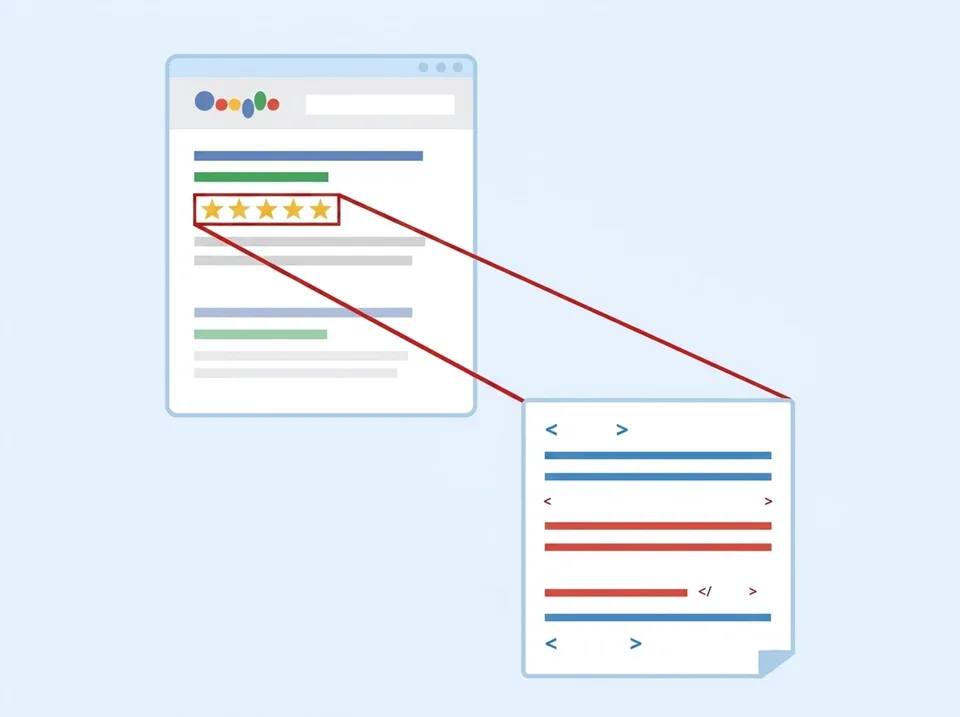
Structured data can help search engines understand eligible page information and can make a page eligible for specific rich results. It is useful when the markup accurately describes visible content and follows the provider's rules. It is not a guaranteed ranking improvement, citation switch, or universal way to make an AI system recommend a business.
Google explicitly says no special schema markup is required to appear in its AI search features. Its advice is to keep using supported structured data where it fits the page and ensure the markup matches what visitors can see.
The short answer
Yes: supported structured data can clarify eligible information and enable certain Google rich-result features.
No: valid markup does not guarantee a rich result, a higher ranking, an AI citation, or a recommendation.
For Google's generative AI features: there is no special AI schema to add.
For any provider: check that provider's current documentation rather than assuming Google's behavior is universal.
What structured data actually does
Structured data is machine-readable markup that describes entities and page content using a defined vocabulary, commonly Schema.org. Google supports specific types and properties for search features. When a page and its markup meet the rules, the page can become eligible for a corresponding rich result.
Eligibility is not display. Google can decide not to show a rich result even when the markup validates. Structured data is one signal attached to a real page, not a replacement for useful content, crawl access, or general search quality.
Google generally recommends JSON-LD for structured data because it is often easier to implement and maintain, though other supported formats exist. Choose the format your team can keep accurate.
Google's position on generative AI features
Google's current AI features documentation says the usual SEO fundamentals remain relevant and there are no additional technical requirements or special optimizations for AI Overviews or AI Mode. It specifically says no special schema.org structured data is required.
The same guidance says structured data should match visible page text. Use it for the search features it actually supports, not because a vendor promises an undocumented AI visibility shortcut.
Match markup to visible content
Do not mark up information that a visitor cannot find on the page. If the markup says a service is available at a location, an event starts on a date, a product has a price, or an article has an author, the visible page should support that fact.
Keep names, URLs, addresses, hours, prices, availability, dates, and ratings current.
Do not add fabricated reviews, ratings, FAQs, or business locations.
Update or remove markup when visible content changes.
Use the most specific supported properties you can maintain accurately.
Ensure the structured-data page is crawlable and not blocked from the intended search system.
Choose types that fit the business and page
Start from the page's actual purpose. An organization or local-business implementation may describe stable identity details. A product page may qualify for supported product markup. An article can use article properties. A breadcrumb can describe navigation hierarchy. Eligibility and required properties differ by feature.
Do not stack unrelated types because more markup appears more comprehensive. Check Google's search gallery and documentation for the feature you want, then use Schema.org documentation for the vocabulary. Provider support is narrower than everything Schema.org can express.
Validate errors and eligibility
Use Google's Rich Results Test to check whether a public page is eligible for supported Google rich results and to identify structured-data errors. After publishing, use URL Inspection in Search Console to inspect Google's indexed view and enhancement reports where available.
Confirm the live page shows the facts being marked up.
Test the production URL or final code with the Rich Results Test.
Fix errors and review warnings in context; warnings can indicate recommended rather than required fields.
Request indexing when appropriate and monitor Search Console.
Retest after template, plugin, pricing, location, or content changes.
Validation shows whether the syntax and supported properties meet the tool's checks. It does not promise that the result will display or that an AI answer will use the page.
Common structured-data overclaims to avoid
“Schema guarantees higher rankings.”
“Every valid page receives a rich result.”
“FAQ markup makes any FAQ appear prominently.”
“More schema types always produce more visibility.”
“There is a special AI schema required for Google AI results.”
“Valid markup guarantees ChatGPT, Google, or another provider will cite the page.”
Each claim skips provider selection, feature eligibility, page quality, or answer-level variability. Ask an agency or plugin vendor to identify the exact supported feature and primary documentation behind a promised outcome.
What to fix before adding more schema
Prioritize the source content. Make the page public and crawlable. Clearly state the service or product, intended customer, location or availability, price conditions where appropriate, evidence, limitations, and next step. Correct inconsistent business details across the website and profiles.
Then add the structured data that truthfully represents those facts and supports a documented search feature. This order reduces the risk of maintaining elaborate markup for weak, outdated, or contradictory pages.
Does this page contain useful, current information a buyer can verify?
Is the chosen type supported for the intended provider feature?
Does every material property match visible content?
Can someone on the team maintain dates, prices, hours, and availability?
Have we validated the live URL and recorded limitations?
Are we measuring eligible search enhancements separately from AI mentions and citations?
Primary sources used
Google Search Central, AI features and your website: https://developers.google.com/search/docs/fundamentals/ai-optimization-guide
Google Search Central, Introduction to structured data markup: https://developers.google.com/search/docs/appearance/structured-data/intro-structured-data
Google Search Central, General structured data guidelines: https://developers.google.com/search/docs/appearance/structured-data/sd-policies